What Self-Perform Means on a Mechanical Bid, and Why It Moves Your Schedule
A percentage on a bid tab says who will actually be standing in your mechanical room when the schedule gets tight.
October 20, 2026 · 4 min read
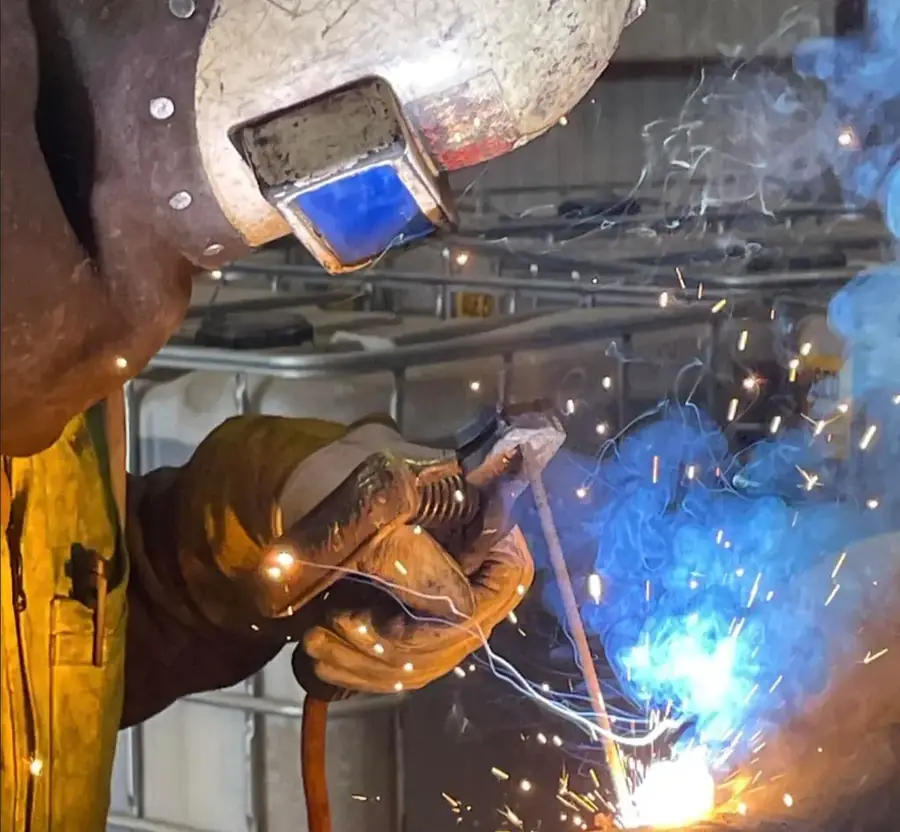
When a mechanical bid comes back with a line about how much of the work the contractor self-performs, it's easy to treat it as a marketing number. It deserves more attention than that. It tells you how many of the people who touch your project are on the contractor's payroll, trained by the contractor's foremen, and answerable to the same project manager you're calling when something changes.
What self-perform actually covers
Self-perform means the contractor's own employees do the field work: the pipefitters, plumbers, sheet metal hands and welders. The alternative is a contractor who wins the job and then hires subcontractors to build most of it. Both models exist and both can work. The difference is control. When your general contractor asks for a crew to move to a different floor on Monday, a self-performing mechanical contractor can make that call internally. A contractor who subs out the work has to ask someone else, and that someone else may have a better-paying job waiting.
Midlands Mechanical self-performs more than 70 percent of its work. That's a company of 100-plus people doing roughly $40 million a year of commercial, industrial and institutional mechanical construction, founded in 1980 by Douglas L. Munter. The scale matters because own forces only help if there are enough of them to staff several projects at once.
Why it shows up in the schedule
Mechanical work sits in the middle of a building schedule. Pipe and duct have to go in after the structure and before the ceilings, insulation, testing and startup. If mechanical slips, everyone behind it slips. A few things about own forces protect that sequence.
- Crews know each other. A foreman who has worked with the same fitters and welders for years doesn't need to explain how he wants a header supported or how he wants a flange aligned.
- Shifts in manpower are quick. If an area opens up early, the project manager can add hands without a new contract, a new insurance certificate and a new orientation for a stranger.
- Quality control is internal. When a weld or a hanger is wrong, the person who fixes it works for the company that will be back next month for the next job.
- Accountability has one address. There's no finger-pointing between a prime and a sub over who owns a missed tie-in.
None of this makes a project immune to delays. Owner changes, late equipment and weather still happen. But when the delay arrives, a contractor with its own people can re-sequence faster than one that has to renegotiate.
What the field sees
The clearest evidence comes from people who've worked beside these crews. Mason Keller wrote in a Google review: "Ricky Christensen and his team at Midlands Mechanical was a great team to work with. They stay on schedule and their mechanical and plumbing work was impeccable." Michael Roane, another reviewer, wrote that Midlands "exceeded every deadline." Those comments come from owners and trade partners, not from a brochure, and both point at the same thing: a crew that shows up consistently and finishes what it starts.
Midlands holds a 4.9 star rating from 27 Google reviews, and the company says the majority of its work is repeat business. Repeat customers are the best check on a self-perform claim. Nobody rehires a contractor whose field crews were strangers every time.
Questions worth asking when you compare bids
If you're a facility manager, owner or general contractor comparing mechanical bids, the self-perform percentage is a good place to start a conversation. A few follow-ups make the number meaningful.
- Which scopes will your own crews perform? Piping, welding, plumbing and sheet metal are different trades, and a contractor may self-perform some and sub others.
- Who is the foreman on my job, and how long has he worked for you?
- What do you subcontract, and to whom? Insulation, controls and balancing are commonly bought out, and that's normal. You just want to know.
- What happens to my schedule if another one of your jobs runs long?
A good answer is specific. A weak answer is a percentage with no names behind it.
What self-perform doesn't fix
Own forces don't replace a good drawing set or early coordination. A contractor with excellent crews still needs the engineer's design to be buildable and the equipment submittals to match the plans. That's why self-performing contractors who are serious about schedule also invest in estimating, CAD and model coordination ahead of the field work. Crews are fastest when the surprises have already been found on a screen.
It also doesn't mean one contractor should do everything. Specialty work sometimes belongs with a specialist, and a contractor who admits that is usually more trustworthy than one who claims to do it all.
If you're reviewing bids for a commercial, industrial, school or hospital project in Omaha, eastern Nebraska, Hastings or Denver, call the Omaha office at (402) 571-4258 and ask for a conversation about which parts of your scope the crews would perform themselves. It's a short call, and the answer will tell you a lot about the schedule you can expect.
Midlands Mechanical, Inc., (402) 571-4258
Call (402) 571-4258More articles
Planning a Steam and Condensate Pipe Replacement in a Food Processing Plant
The pipe work is the easy part; the shutdown window and the sanitary rules around it decide whether the plant restarts on time.
Mechanical Work in an Occupied Hospital Remodel: Phasing, Medical Gas and Infection Control
In a live hospital, the pipe is only part of the job; the rest is keeping patients, staff and systems protected while you build.